M&A Advisory for Renewable Energy
Over 15 years of sector experience and an international network of qualified investors in Europe, the Middle East and Africa.
Atlas Transactions Partners advises both sellers and buyers of photovoltaic, wind and BESS projects and portfolios, through structured, confidential and competitive sale and acquisition processes.
Atlas does not work with brokers. Independent Sell-Side Advisory firm specializing in renewable energy asset transactions.
Why choose Atlas Transactions Partners?
We only accept mandates that can be credibly presented to the investor market.
This requirement allows us to preserve the quality of the opportunities presented to our network of investors and to offer each of our clients support based on credibility, confidentiality and efficiency.
Our ambition is to create sustainable transactions that contribute to the development of renewable energies and the success of our clients.
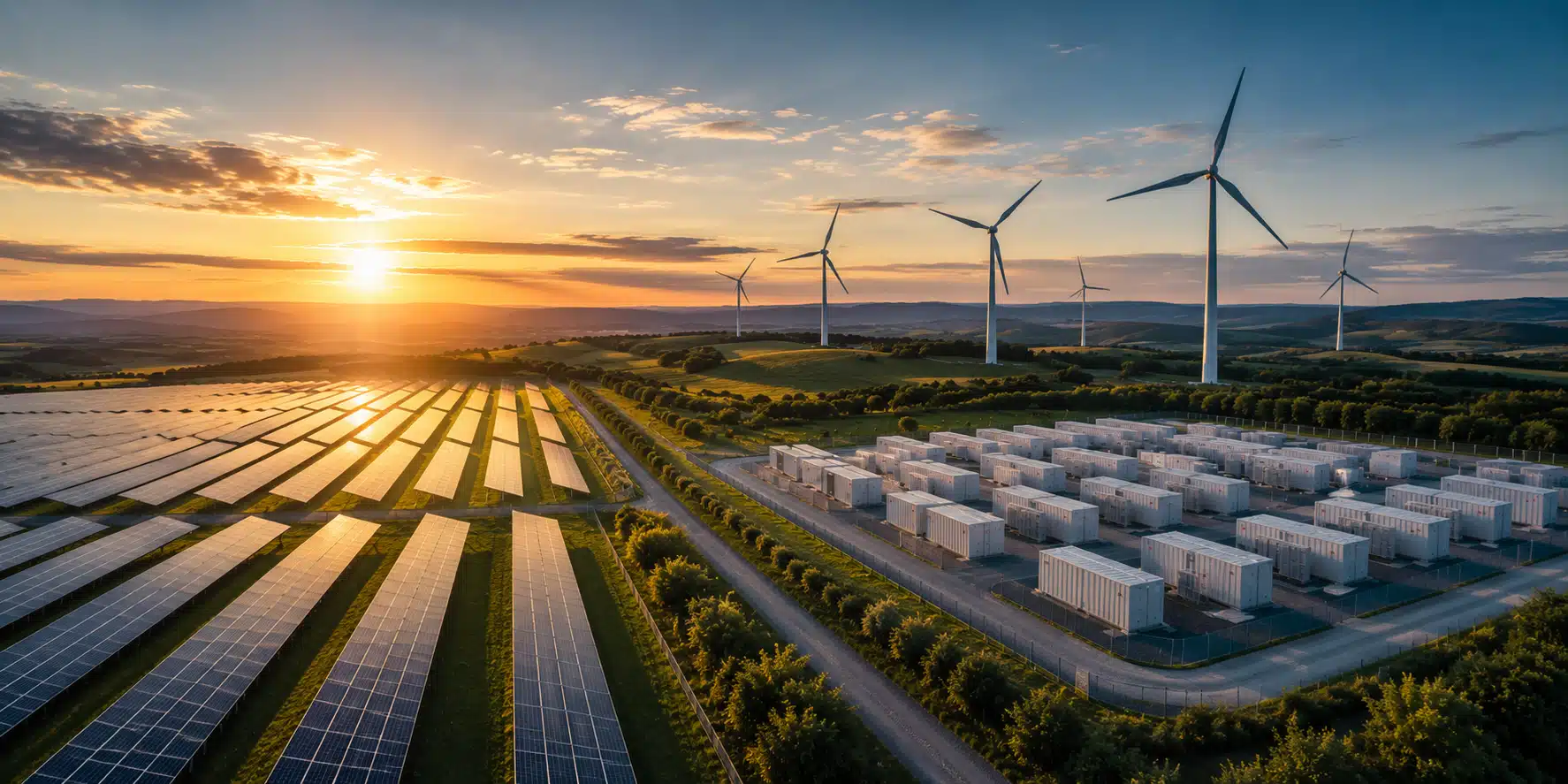
Sector expertise supporting renewable energy transactions
About
We exclusively support developers and asset owners in the sale of photovoltaic, wind and energy storage (BESS) projects and portfolios, offering them independent, confidential support fully dedicated to the success of their transaction.
Our approach is based on a simple conviction: a successful transaction depends not only on the quality of the asset, but also on the preparation of the process, the selection of investors and the ability to conduct negotiations to closing.
Thanks to our in-depth knowledge of the renewable energy sector and an international network of qualified investors, we structure competitive processes that allow our clients to present their projects under the best market conditions.
Present in Europe, the Middle East and Africa, Atlas Transactions Partners applies the same high standards to every mandate, regardless of the size of the transaction or the stage of development of the assets.
We favour a selective approach, based on the quality of projects, the confidentiality of exchanges and a lasting relationship of trust with our clients.
After more than fifteen years dedicated to the development of renewable energies, I wanted to create a firm capable of providing developers with independent and specialized expertise in asset disposal operations.
Throughout my career, I have collaborated with developers, investors, independent power producers, and financial partners. This experience has allowed me to understand the expectations of each party and to appreciate the importance of structured, discreet, and rigorous support throughout a transaction.
Atlas Transactions Partners was born from this desire: to offer each client a single point of contact, fully committed to defending their interests and conducting an efficient, transparent and confidential sale process.
I am convinced that the best transactions are those that create value for all stakeholders while contributing to the sustainable development of energy infrastructure.
How can we assist you?
I wish to sell a project or a portfolio
I would like to acquire a project
We source off-market projects, ready-to-build or in operation, matching your criteria, and support you through to signing.
I am looking for an investor or a partner.
I would like strategic advice
Our values
At Atlas Transactions Partners, our values are at the heart of every one of our missions. They guide our way of working and reflect the commitments we make to our clients and partners.
Requirement
Each mandate is treated with the same level of rigor, regardless of its size.
Integrity
We act with honesty, transparency, and ethics in every interaction we have. Our recommendations are based on objective analysis and a long-term vision, enabling our clients to make informed decisions with confidence.
Confidentiality
Protecting our clients' strategic information is a top priority.
Independence
Our independence is the foundation of our objectivity. Free from any conflict of interest, we exclusively defend the interests of our clients and support them impartially throughout their projects. On each transaction, we act for one party only and never receive fees from both sides without the prior written agreement of both.
Commitment
Each transaction is unique. We are fully committed to working alongside our clients with availability, responsiveness and high standards, in order to build tailor-made solutions that meet their strategic objectives.
Lasting trust
We firmly believe that the best deals are built first and foremost on the quality of human relationships. That's why we prioritize an approach based on trust, respect for commitments, and the creation of lasting partnerships.
Our vision
Connecting energy-transforming projects with the investors building the future.

We are convinced that the energy transition depends as much on the quality of projects as on the ability to bring together the right partners at the right time.
In a constantly evolving market, where financial, technical and regulatory issues are increasingly complex, each transaction must be conducted with rigor, transparency and a perfect understanding of the expectations of each party.
AtAtlas Transactions Partners, we believe that a successful transaction is not measured solely by its financial value. It is built on trust, listening, and the creation of lasting relationships between developers, investors, and energy producers.
Our ambition is to become a leading partner in mergers and acquisitions dedicated to renewable energy in Europe, the Middle East and Africa, supporting our clients with independence, confidentiality and high standards.
By fostering sound and value-creating transactions, we contribute, on our scale, to the development of energy infrastructure that will shape a more sustainable future.

Trust is the foundation of every transaction
Our commitment charter
At Atlas Transactions Partners, we are convinced that a successful transaction is based first and foremost on a relationship of trust, transparency and mutual commitment.
This charter defines the principles that guide each of our missions and the conditions under which we support our clients.
1. We exclusively represent the interests of the seller
Our mission is to defend the interests of our clients throughout the entire sale process.
We act with independence, objectivity and confidentiality in order to find the best transaction conditions and the most suitable buyers for each project.
2. An exclusive mandate, a guarantee of efficiency
Each sale mission is carried out under an exclusive mandate with an initial duration of twelve (12) months.
This exclusivity allows us to fully mobilize our expertise, our international network of investors and all of our resources in order to conduct a structured, confidential and efficient process.
When negotiations are underway at the end of the mandate, the mandate will be extended until the transaction is finalized.
For buyers and investors, we act under a search mandate defining their investment criteria (technology, stage, size, country) and our success fee.
3. A rigorous selection of opportunities
In order to preserve the quality of the projects presented to our network of investors, each file is subject to a preliminary analysis.
We exclusively consider projects with support:
- from a teaser presentation;
- a description of the assets;
- an indication of the stage of progress of the projects;
- of a selling price.
We reserve the right to refuse a mandate when the asking price appears manifestly disconnected from market conditions or cannot be justified in light of the characteristics of the asset.
When possible, we prioritize dialogue with the seller in order to jointly assess a positioning consistent with market expectations.
4. Absolute confidentiality
All information entrusted to Atlas Transactions Partners is treated with the strictest confidentiality.
5. Personalized support
Each project is unique.
We prioritize a tailored approach, adapted to our clients’ objectives, based on listening, availability and a perfect knowledge of the renewable energy market.
Our ambition is to build lasting relationships based on trust, high standards and value creation.
6. Our commitment
We carefully select the projects we support in order to dedicate to each one the time, resources and expertise it deserves.
Because a successful transaction is not based solely on price, but above all on the quality of preparation, trust between the parties and the ability to bring together the right project with the right investor.
Atlas Transactions Partners is committed to defending your interests with independence, confidentiality, and high standards until your transaction is successful.
Our network
An international network at the service of your projects
The renewable energy market is now global.
Investors are looking for quality assets across multiple continents, while developers want access to financial partners who can support their growth.
Atlas Transactions Partners develops an international network composed of investment funds, independent energy producers, utilities, family offices and institutional investors active in Europe, the Middle East and Africa.
This presence allows us to quickly identify the most relevant partners for each project.


Our remuneration
Remuneration based exclusively on success
We do not charge any study, processing or marketing fees. Our remuneration is exclusively linked to the success of the transaction.
Depending on the transaction, our fee is paid either by the seller (sell-side mandate) or by the buyer (buy-side search mandate), as agreed in writing before any project is presented.
Fees are only due after the sale has been completed, i.e. after full payment if payment is made in one instalment, or pro rata to the sums received, in accordance with the terms of the mandate.
Our success is directly linked to that of our clients.
atlas Transactions Partners
Our expertise
Expertise built on over fifteen years of experience
Since 2008, our career has been entirely dedicated to the development of renewable energies.
This experience allows us to understand the operational realities faced by developers, but also the requirements of international investors when they analyze an acquisition opportunity.
This dual expertise is now the DNA of Atlas Transactions Partners.

We speak the language of developers because we understand their constraints.
We also talk about investors because we understand their analytical criteria, their expectations, and their value creation objectives.
We intervene at all stages of an operation:
- Strategic Asset Analysis
- Targeted search for qualified investors
- Organization of competitive processes
- Coordination of due diligence
- Negotiating offers
- Support until closing
Our goal is to offer our clients a structured, efficient, and completely confidential process. Let’s build your next transaction together
Whether you are a developer, investor, independent producer or infrastructure fund, Atlas Transactions Partners supports you in your acquisition, disposal and opportunity search operations with an independent, confidential and resolutely results-oriented approach.
Confidentiality
Absolute protection of your strategic data and strict anonymity of your transactions at every stage.
Professionalism
First-rate financial execution and perfect mastery of complex M&A processes.
Credibility
A recognized independent firm, guaranteeing reliable analyses and objective valuations to the market.
Network
Direct and privileged access to the biggest decision-makers, developers and institutional investors in Europe.
Selectivity
A rigorous review of applications to select and present only high value-added opportunities.
Why choose us?
Each transaction is unique.
Our mission is to support our clients with rigor, discretion and commitment in order to create the best conditions for success for their projects and investments.
Over 15 years of experience in renewable energy.
- Expertise dedicated to photovoltaic, wind and BESS transactions.
- An international network of qualified investors.
- Independent, confidential and personalized support.
- A presence in Europe, the Middle East and Africa.

Area of operation
Europe
|
Africa
|
Middle East
Market analysis
Why are developers selling more RTB portfolios in 2026?
The European renewable energy market is entering a new phase of maturity. After several years dedicated to accumulating pipelines, many developers are now choosing to sell off part of their projects at the Ready to Build (RTB) stage in order to preserve their financial capacity and concentrate their resources on the most strategic assets.
This development does not necessarily reflect a loss of confidence in renewable energies. Rather, it reflects a transformation in the economic model of developers.
Greater financing needs
Developing a project up to the RTB stage requires increasing investments: land security, environmental studies, permits, connection, engineering, financial guarantees and mobilization of specialized teams.
Even when equipment costs decrease, financing, grid, and implementation constraints remain significant. The International Energy Agency, in particular, emphasizes that grid connection difficulties, supply chain constraints, and the cost of capital continue to weigh on the development of new renewable energy capacity.
For an independent developer, holding onto an entire portfolio until construction can tie up capital for several years. Selling one or more RTB projects then allows them to free up cash and finance new developments.
Capital recycling is becoming a strategic tool.
Selling an RTB portfolio is no longer considered solely as a final exit. It increasingly constitutes a capital recycling operation.
The proceeds from the sale can be used for:
- to finance new projects;
- strengthen development teams;
- cover the guarantees and connection costs;
- reduce debt;
- retain a stake in certain priority assets;
- diversify the portfolio towards BESS or other technologies.
This approach allows the developer to maintain their business while limiting their exposure to the financing needs of the construction phase.
Market risks have become more complex.
The value of a project no longer depends solely on obtaining permits. Investors now analyze the following with particular attention:
- the actual availability of the connection;
- the cost of connection;
- the risk of congestion;
- exposure to negative prices;
- the production profile;
- income security;
- the possibilities of hybridization with storage.
In 2025, negative wholesale prices accounted for approximately 6% of trading hours in several European markets, including France, Germany, the Netherlands, and Spain. This increasing frequency reinforces the uncertainties surrounding the future revenues of purely commercial projects.
Increased grid constraints and curtailment also contribute to greater investor selectivity. The IEA estimates that more than 10 TWh of renewable generation was curtailed in the European Union in 2024, illustrating the growing importance of flexibility and storage.
Investors favor projects that are truly executable.
In this context, buyers are not only looking for megawatts under development. They favor assets with strong execution visibility:
- secure land;
- final permits or permits that are sufficiently advanced;
- Connection validated;
- realistic calendar;
- documented budget;
- electricity marketing strategy clearly identified.
A high-quality RTB project therefore remains attractive. However, the valuation gap between solid projects and those with technical or regulatory uncertainties tends to widen.
A new discipline for salespeople
Selling an RTB portfolio in 2026 will therefore require more preparation. A competitive transaction relies on thorough documentation, a realistic risk analysis, and pricing consistent with market conditions.
For developers, selling RTB assets can be a relevant strategic decision: it allows them to realize some of the value created, preserve the company’s financial capacity and continue developing new projects.
The success of the operation nevertheless depends on the ability to present investors with a credible, documented and directly executable portfolio.
How are valuation multiples for BESS projects evolving?
The European battery storage market is experiencing rapid growth. However, unlike renewable assets which benefit from relatively predictable revenues, BESS projects cannot be valued using a single multiple applicable to the entire market.
In 2026, their value depends primarily on the quality of the project, its location, its storage duration, and the structure of its revenues.
A market that has become more liquid
The number of financing and acquisition transactions involving batteries has increased significantly. Modo Energy recorded 82 European transactions in 2025, compared to 25 in 2024. The reported value of the tracked transactions reached €8.6 billion, while acquisitions represented approximately 26% of the total number of transactions.
This growth reflects the emergence of a genuine secondary market. Some developers build or secure their projects before selling them to long-term investors, infrastructure funds, or integrated producers.
The increasing number of transactions gradually provides more market benchmarks. However, it does not yet lead to a complete harmonization of valuation methods.
Why there is no universal multiple
The value of a BESS can be expressed in different ways:
- price per MW;
- price per MWh of capacity;
- multiple of EBITDA;
- present value of cash flows;
- expected return on invested capital;
- premium compared to the remaining costs to be incurred.
These indicators are only comparable when the projects have similar characteristics.
A 100 MW BESS with a one-hour duration does not offer the same economic profile as a 100 MW, 400 MWh asset. Similarly, an operational project benefiting from a tolling contract cannot be directly compared to an RTB project fully exposed to market revenues.
The revenue contract is becoming a decisive factor.
The main factor driving valuation changes today is the security of income.
By 2025, the number of standalone tolling contracts identified in Europe increased from three to fifteen. Including financing based on such contracts, Modo Energy identifies nineteen transactions with a tolling structure.
These contracts allow the owner to receive predictable compensation in exchange for making the battery available to an operator, utility, or trader.
They reduce exposure to fluctuations in electricity markets and generally improve:
- bankability;
- cash flow visibility;
- debt capacity;
- the interest of institutional investors.
EY also notes that the European market is gradually evolving from a purely market-based model towards structures that allow for a more efficient distribution of risks between the asset owner and the counterparty taking on exposure to the electricity markets.
Marketable assets remain more difficult to value.
A merchant project may offer higher return potential, but its value depends heavily on the assumptions made regarding:
- day-to-day and intraday arbitration;
- system services;
- capacity markets;
- price volatility;
- the future saturation of ancillary revenues;
- the optimizer strategy;
- battery degradation;
- replacement costs.
Two investors can therefore arrive at very different valuations from the same asset.
Projects with a robust electrical connection, high operational flexibility, and access to multiple revenue streams are generally valued higher than assets dependent on a single service.
Construction costs are falling, but not uniformly.
The decrease in equipment costs supports the economics of projects. According to market data reported in 2025, the construction cost of a two-hour UK BESS had decreased by approximately 30% in two years, to just over £500,000 per MW.
This decrease, however, does not automatically translate into a proportional increase in the value of projects under development. When technology costs fall, buyers may also reduce the premium they are willing to pay for an early-stage pipeline.
Value is therefore increasingly concentrated on elements that are difficult to reproduce:
- the connection;
- land;
- the authorizations;
- the income contract;
- market access;
- the quality of the execution.
References to be interpreted with caution
Some public transactions do, however, provide some guidance. The acquisition of the UK portfolio Harmony Energy Income Trust was announced based on an enterprise value of approximately £340 million, or roughly £860,000 per MW. This figure, however, concerned an operational portfolio and is not a directly applicable benchmark for an RTB or development project.
In practice, BESS valuations are therefore evolving less towards a single “market multiple” than towards increasing segmentation between:
- early pipelines;
- authorized projects;
- RTB projects;
- assets under construction;
- merchant operating assets;
- Contracted operational assets.
The quality of the connection and the robustness of the revenue model become the true drivers of value.
Is the return of PPAs changing investor strategies?
Power Purchase Agreements are once again playing a central role in renewable energy investment strategies. But their return does not simply mean a return to traditional fixed-rate contracts.
By 2026, the PPA market becomes more selective, more structured and more oriented towards risk management.
A market redefining itself after the 2025 slowdown
After several years of strong growth, global renewable power purchase agreement (PPA) activity declined in 2025. BloombergNEF estimates that corporate offsite contract volumes decreased by approximately 10% globally, while large technology companies accounted for nearly half of the activity.
In Europe, the slowdown was even more pronounced. Prices offered by buyers were sometimes lower than the level needed to cover the costs of new projects. Prices captured by some solar installations were also affected by the increase in periods of overproduction and negative prices.
The market did not stop: it adjusted.
Lower construction costs, the return of energy volatility and the gradual convergence between producer and buyer expectations could support a recovery in volumes in 2026.
Investors are seeking greater visibility.
For investors, a PPA remains an important tool for securing income. It can facilitate:
- bank financing;
- cash flow forecasting;
- reducing exposure to the spot market;
- the reduction in the cost of capital;
- visibility on the return on the asset.
However, the mere existence of a PPA is no longer sufficient to guarantee the attractiveness of a project.
Investors are now closely examining:
- the buyer’s creditworthiness;
- the duration of the contract;
- price indexation;
- termination clauses;
- the risk of volume;
- the risk profile;
- the treatment of negative prices;
- the guarantees provided by the parties.
The strength of the counterparty can thus directly influence the bankability and value of the project.
Fixed PPAs are giving way to more sophisticated structures.
The increase in the number of hours at negative price weakens contracts that do not sufficiently take into account the actual production profile.
This situation fosters the emergence of new structures:
- PPA with floor and ceiling;
- PPA partially indexed;
- pay-as-produced contracts;
- baseload contracts;
- hybrid PPAs combining solar, wind and storage;
- contracts associated with flexibility mechanisms;
- shorter-term contracts with specific protections.
S&P Global anticipates, in particular, an increase in hybrid PPAs and storage-backed contracts to limit the risk associated with negative prices and the deterioration of captured prices.
The goal is no longer just to set a price, but to improve the match between the project’s output and the buyer’s consumption profile.
Le stockage devient un élément de la stratégie contractuelle
Combining a renewable energy park with a battery can enable:
- to shift part of the production to better-paid hours;
- to reduce exposure to negative prices;
- to improve the delivery profile;
- to provide energy that is closer to the consumer's needs;
- to participate in several markets.
This evolution is leading some investors to no longer analyze renewable energy production and storage separately. They are gradually assessing the value of an energy system that combines generation, flexibility, and contractual security.
Hybrid projects can therefore benefit from increasing interest, provided that the connection rules, authorizations and contracts actually allow for coordinated operation.
Demand driven by new buyers
Large technology companies and data centers remain among the most active buyers. Their high consumption and continuous electricity needs lead them to seek long-term contracts, sometimes based on renewable energy supply that is more closely correlated to their hourly consumption.
At the same time, aggregated PPAs can facilitate access for several medium-sized companies to a joint contract.
This diversification expands the market, but also increases the legal and financial complexity of the operations.
What impact on acquisition strategies?
The return of PPAs changes the investment criteria.
Buyers place greater value on projects that have:
- of a clearly defined marketing strategy;
- of a solvent counterparty;
- of a balanced contract;
- protection against periods of negative prices;
- technical flexibility;
- of a possibility of association with a BESS.
However, a poorly structured PPA can also reduce the value of an asset if it excessively limits its upside potential or transfers risks that are difficult to manage.
Therefore, by 2026, the PPA should no longer be considered solely as an electricity sales contract. It becomes a genuine instrument for allocating risks between the producer, the investor, the lender, and the consumer.
For investors, the best strategy is not necessarily to seek the longest contract duration, but to build a coherent balance between income security, flexibility and controlled exposure to the market.
Investment criteria
(ACQUISITION OF ASSETS)

Project Types & Maturity
Projects at the RTB (Ready to Build) stage benefiting from a secure purchase price and a validated connection cost.
Securing income
Assets backed by regulated purchase prices or long-term over-the-counter contracts (PPA).
Minimum size
Power of 1 MW minimum per project or asset portfolio.
Technology
Photovoltaic power plants, Wind (onshore) parks and battery storage systems (BESS).
OUR SELECTION PROCESS
Our selection process is based on a rigorous analysis of the technical, regulatory, and financial criteria of each project. After qualification and the signing of a confidentiality agreement, the selected opportunities will be presented to a network of chosen investors, ensuring a fast, confidential, and efficient process until the transaction is finalized.

1. Identification of the opportunity
Preliminary review and analysis of the project or asset portfolio presentation teaser, which must include at a minimum the power output, production, rent, connection cost, and SALE PRICE. This teaser alone must be sufficient to demonstrate interest.
Teaser content:
- Seller Presentation
- Company
- Activity
- Interlocutor
- Project Description
- Nature of the transfer
- Technology
- Location
- Capacity (MW)
- Stage of progress
- Key Strengths
- 4 to 6 key points justifying the interest of the Project.
- Seller Expectations
- Scope of the transfer
- Expected valuation
- Desired calendar
- Documents to be provided after signing the mandate
- Data Room
- Financial model
- Legal and technical documentation (if available)
2. Signing of a non-disclosure agreement (NDA)
Protection of sensitive information and securing of exchanges between parties.
3. Technical and regulatory analysis
Study of the main elements: Status of authorizations, Land, Connection, Environmental studies, Implementation schedule.
4. Presentation to qualified investors
Targeted distribution to selected investors and industrialists matching the asset profile.
5. Receipt of indicative offers
Collection and comparison of expressions of interest and non-binding offers.
6. Due Diligence
Supporting buyers in technical, financial, legal and commercial audits.
7. Negotiation and Closing
Coordination of exchanges until the signing of final agreements and the completion of the transaction.
8. Asset disposal
Finalization and official transfer of ownership of the energy asset.

Are you planning a transaction in the renewable energy sector?
Let's talk about your project.
Whether you are a developer, investor, independent energy producer or asset owner, Atlas Transactions Partners supports you with confidentiality, independence and expertise.